
When visited: July 5, 2007
When Established: November 10, 1978
Park ranking: 41 out of 63
Highlight: Badlands, wild horses, prairie dogs, bison
Why not to go: If you don’t like badlands and wildlife
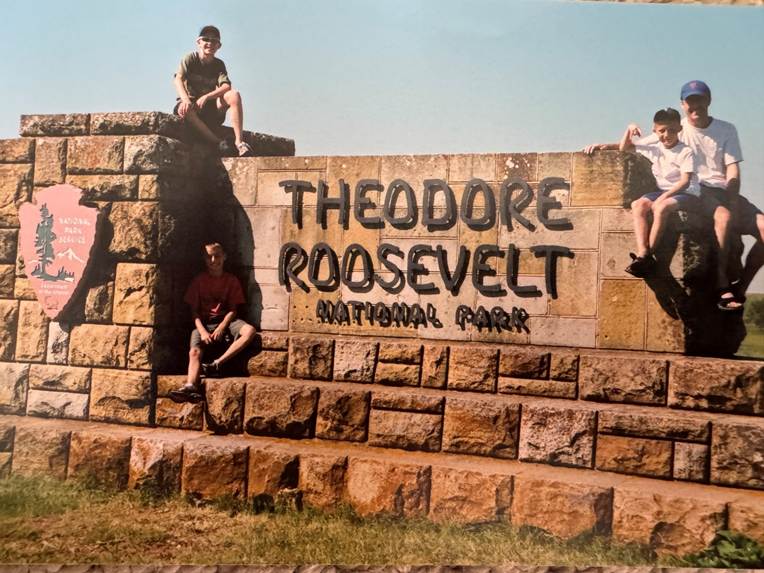
Posting at the South Unit Welcome sign in 2007 – find Matt
We visited Theodore Roosevelt National Park as part of our 2007 cross country trip. We travelled over 14,000 miles on that trip and we didn’t have a ton of expectations for our visit to this national park. We left with memories of up close and personal encounters during bison traffic jams, watching prairie dog colonies go about their daily routines, being awed by the herd of wild horses and enjoying the beauty of the rolling Badlands and the Little Missouri River that runs through the park.
We spent July 4thin Bismarck, North Dakota and enjoyed the fireworks on the Capital lawn. We had spent time visiting Fort Mandan and the Knife River Indian Villages – two stops definitely worth doing. At Ft. Mandan, we learned about Lewis and Clark and imagined what it would have been like to live for 5 months in the fort in the brutal North Dakota winters. The fort park site was near the Missouri River, and a nice replica fort exists on site to help with the imagining. At Knife River we saw earthen homes and imagined the area with thousands of Native Americans.
Theodore Roosevelt National Park (TRNP) is about a two-hour drive from Bismarck and three and a half from Rapid City, South Dakota. There is a time zone change between Bismarck and Theodore Roosevelt.
There are three different sections of TRNP, the North Unit, the South Unit and the Elkhorn Ranch Unit. The Elkhorn Ranch unit preserves the site of the Teddy’s home ranch, but it is in an undeveloped and remote area along the Missouri River. The South Unit is very close to Interstate 94 and the North unit is approximately 90 minutes from the South Unit
We began our visit by stopping at the lookout from I-94 and took in views from the Painted Canyon Visitor’s Center – we only planned time for a visit to the southern section of the park so this was a good overview..
Our main activity in the park was the South Unit 36-mile loop road which lies entirely within the Lower Missouri Badlands. There are many hikes available for those looking for that. As it was hot and we were time limited, we didn’t do any formal hiking – although we spent lots of time outside of the van when we could.
A highlight for some of the national park is the geology which began over 65 million years ago following the extinction of the dinosaurs. The western part of the US was folding to create the Rocky Mountains. Sediment was accumulating from the folding, and volcanoes were erupting to deposit ash. Over time, the sediments and ash eroded and created the sandstone, siltstone, and mudstone layers now exposed in the park. This created the badlands, the many geological features and left many fossils throughout the park.
The park also has the Little Missouri River, floodpains, glacial deposits and prairie lands. But it was the wildlife we wanted to see – so we set out on the South Unit Loop Road from the Visitor Center near Medora, North Dakota.
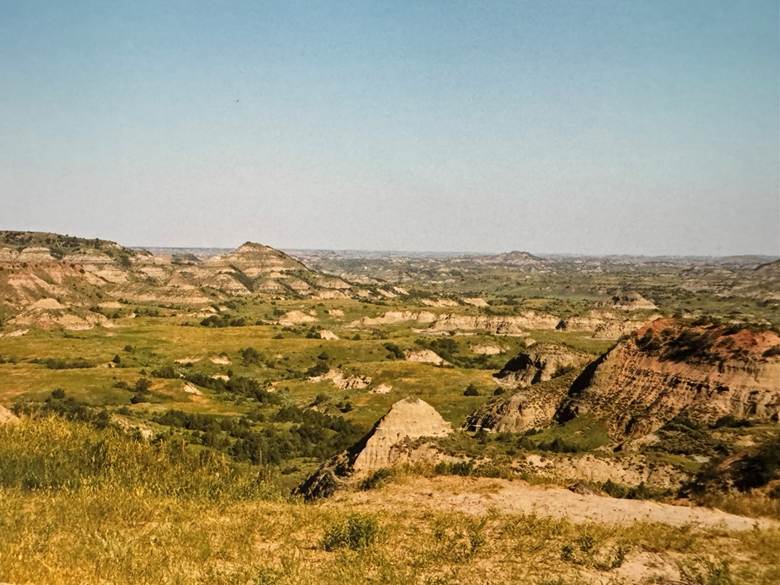
View of the Badlands in the South Unit
One of the first things we experienced was dozens of prairie dog villages. This was a first for our family. We watched the hundreds of animals go in and out of their homes, dive into their holes when they sensed danger and of course, eat. We had our binoculars to get close up views and stayed for what seemed like hours observing their behavior.
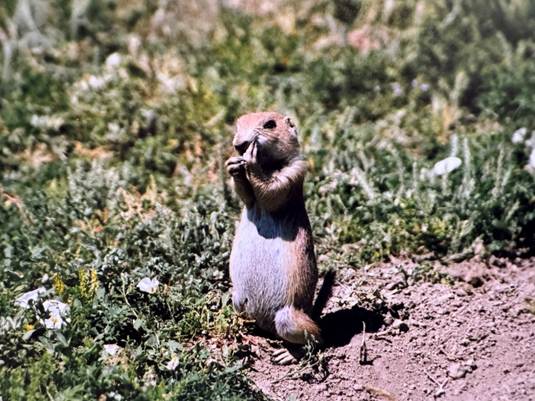
One of hundreds we saw throughout the prairie dog colonies
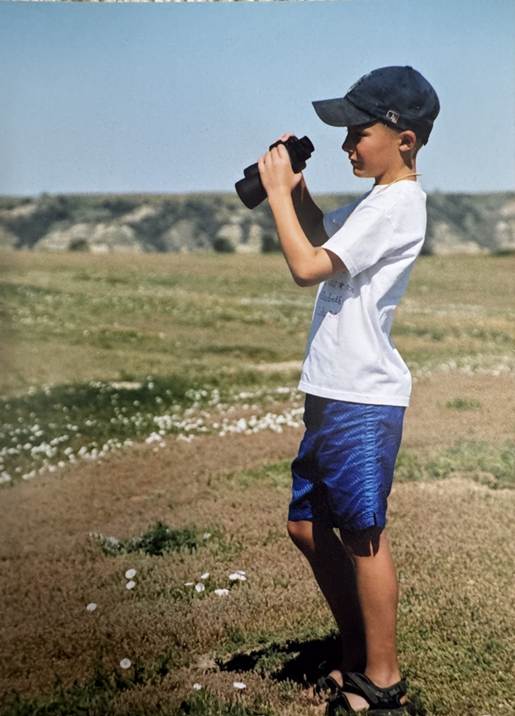
Scott spending quality time experiencing the wildlife
After the intimate, memorable experience enjoying the prairie dogs, it was time to move on, so we jumped back into the van and continued on the loop. We were quickly brought to a standstill by a herd of bison on the road. There were well over 100 of them coming straight at us! A buffalo encounter could put a quick end to our trip if they were so inclined! We parked for over 10 minutes to let the bison pass. And pass they did, they were so close we could have touched them from our van windows. We were frozen and trapped! At one point, a large bull was licking the dead bugs off the front of our van. Bulls were thrusting their heads back and forth as they passed – I was growing more concerned that we would be struck by one of their powerful horns as the passed us. They were so close we could see the scars, the open wounds, the flies and the babies. It was quite the memorable experience.
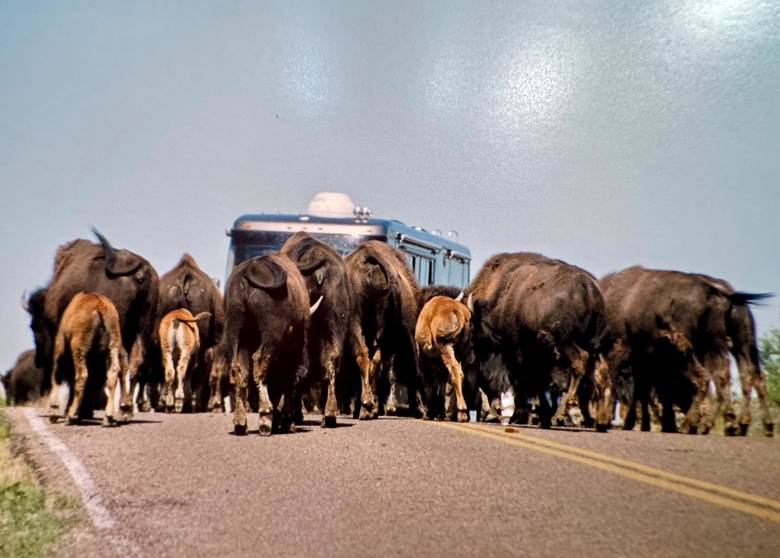
Bison with the right of way!
After a while they passed and we continued our drive. A few miles later we encountered wild horses for the first and only time in our national park travels. We came upon a herd of about 20 horses up close – we sat and watched for a while. The horses are feral coming from domestic stock over hundreds of years ago.. The park maintains the horses for cultural purposes and monitors their activity in the area.
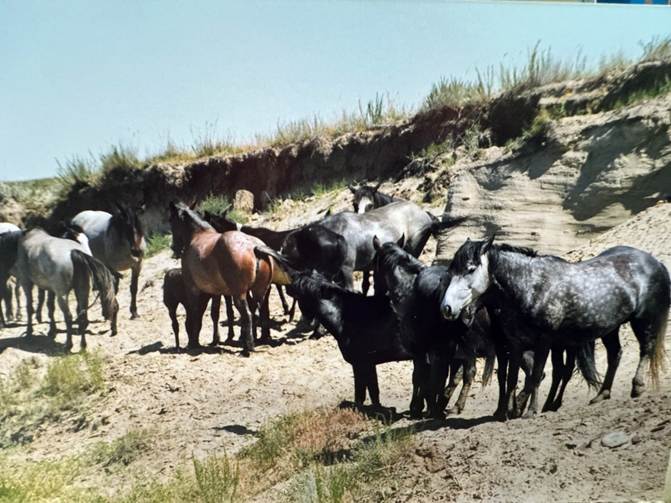
Our first (and only) experience with wild horses
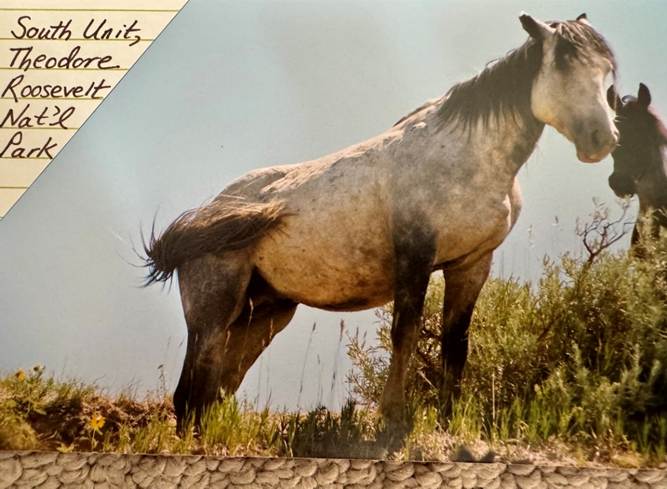
The movie Spirit was popular at the time and we reflected on that during our horse viewing
Theodore Roosevelt National Park is remembered by my family for the prairie dogs, the bison and the wild horses. We also saw many wild turkeys.
But what we saw only scratches the wildlife surface – the park is home to badgers, coyotes, elk, pronghorns, bobcats, eagles and many other birds. More time and patience would have allowed us the opportunity to try to find these species. But to see a country as large as ours in 7 weeks didn’t allow us that time.
The peace and serenity from the Elkhorn Ranch Unit, looks amazing. It would also be wonderful to deeper explore the history of one of our country’s leading advocates for national parks and the environment, the geology and wildlife of the north region.
Some folks only see the park from I-94. We saw it from a loop road, but there is no doubt there is so much more to see and do in the three different sections of the park. Teddy Roosevelt is one of the under-appreciated parks in the system — perhaps that is due to its remoteness. But that helps make it special.


Leave a Reply