
When visited: February 25, 2022
When Established: June,1980 National Park – 1968 National Monument
Park ranking: 44 out of 63
Highlight: Mangrove paddling, reef and mangrove snorkeling, seahorses
Why not to go: If you don’t like water!
By February 2022, we only had 9 national parks left to visit! We set a goal to finish all of the continental U.S. parks and Alaska parks in 2022 leaving American Samoa as the last park to visit! We have friends that live in Miami and they graciously allowed us to use their house as a base to visit both Biscayne National Park and Everglades National Park. We also combined this with a flight to St. Thomas for the US Virgin Islands National Park and a drive to Key West to explore Dry Tortugas National Park.
An important thing to know about Biscayne National Park is that it is 95% water and most national park activities are focused on water: snorkeling, scuba diving, paddle boarding, kayaking, boating etc. We chose the Biscayne National Park Institute for a Paddle and Snorkel Eco-Adventure. Snorkel & Paddle Eco-Adventure | Biscayne National Park Institute
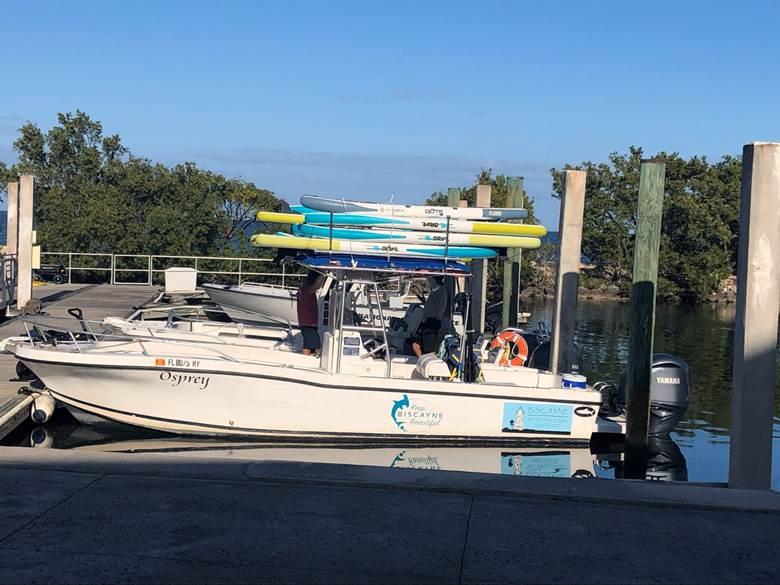
Our boat that guided us through the mangroves
Our trip departed Convoy Point located at the Dante Fascell National Park Visitor Center in Homestead, FL. The institute provided snorkel equipment, fins, and all the gear needed for paddleboarding. I did bring a prescription snorkel mask that makes things so much better for me in the water. There was no lunch with the trip, so we brought some sandwiches for our lunch stop.
We sorted out our snorkel and paddle gear and boarded our small boat and headed to the mangroves. Our plan was to paddleboard through the mangroves and search for wildlife, sea birds or fish. We saw some small sharks in the mangrove waters and fish darting into and out of the mangrove jungle that lives under the water. Mangrove roots are aquatic heaven for fish. I was hoping to see a roseate spoonbill – I had seen two briefly flying over us earlier in the trip, but I have never seen any up close.
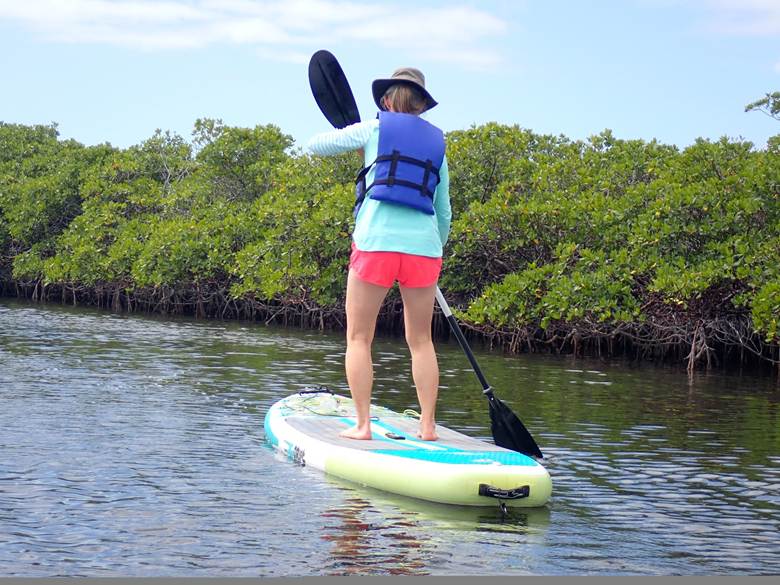
Missy, the natural paddleboarder
I had paddle boarded very little before and was skeptical of my ability – not so much to navigate it but to stand up seemed to be out of my comfort zone. To Missy, it was nothing. She was very comfortable paddling through the mangroves like she had done it her whole life.
We paddled for about an hour through very tight areas and were able to appreciate how the mangroves protect the coastline. We learned how mangroves were cleared and sand imported to create Miami Beach and turn it into the tourist mecca that it is today. That is a reason the park is so important – to protect the natural coastline and the mangroves.
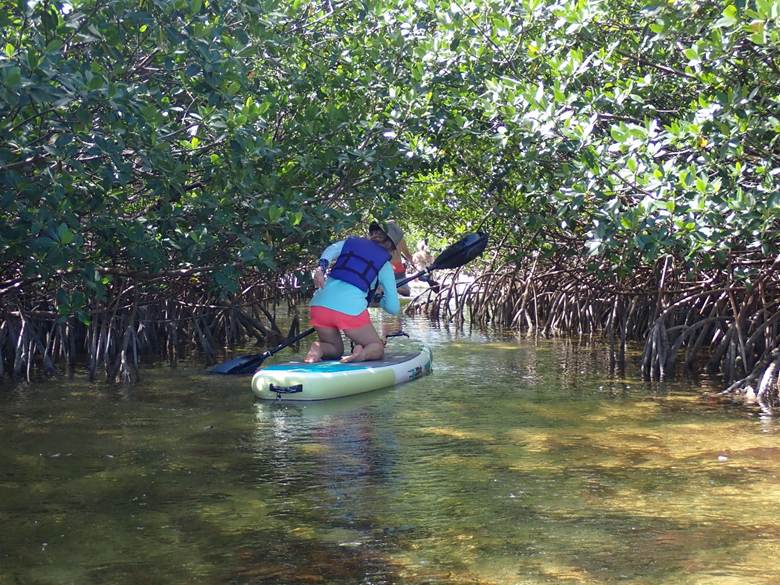
Paddling through the tight spaces in the mangroves
We learned of the history of the park – the battle for preserving 50 small keys vs developing them and turning them into more tropical tourist destinations. The battle was heated, turned violent or at least nasty until Herbert Hoover Jr, helped bring DC legislators to the area and convinced them that it should be preserved. Lyndon Johnson signed a bill making it a monument in 1968 and it was converted to a National Park in 1980
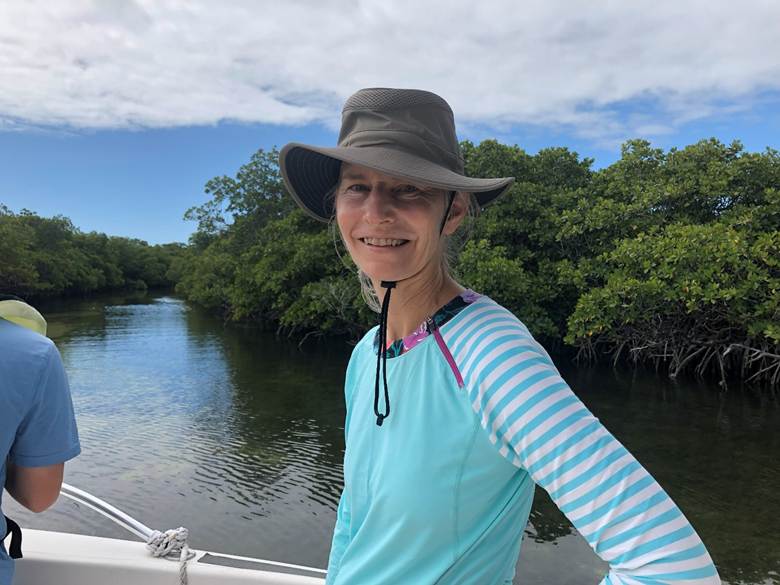
After our paddleboarding exploring, we had our lunch and discussed what was next. The ocean was rough but it might still be possible to snorkel out on the reef – but visibility might be low. Or we could snorkel around the mangroves. Missy and I had never snorkeled around mangroves and were skeptical, so we were in the “let’s go to the reef” camp. Others agreed – turns out that was a mistake. It was about 30 minutes to get to the reef by boat. We donned on our snorkel gear and got into the ocean. We were able to see some tropical fish, but our guide was right, the water was cloudy and visibility was low. Having snorkeled in the Galapagos a few years earlier, this was not great quality snorkeling. So, we gave it a go for about 30 minutes and got back on the boat and headed to the mangroves to give snorkeling a try there.
I wish we had spent all of our time there. To experience the fish darting through their ecosystem was unforgettable. The key was to remain completely still in the water and after 15 seconds or so the fish came to life, and we were part of their world. A real live fish tank without the tank.
Missy and I had found some mangroves for ourselves away from the other boaters and we were incredibly lucky to see a sea horse floating through the ecosystem. I have never seen one in the wild and probably never will again. A true national park highlight for us. We were unable to get pictures but that doesn’t detract from the memory.
As our departure time arrived, we boarded the boat back to the Visitor Center. Our guides were fantastic and we had three very first times for us – snorkeling in the mangroves, paddleboarding through them and seeing a seahorse. Like many other things in life, this park is hard to appreciate unless you jump in. The experience is on or in the water. Unlike almost every other national park web site, hiking isn’t listed as one of the things to do 😊. We embraced the opportunity to learn, try new things and appreciate the continued balance between preservation and economic development and tourism.
 We Visited All 63 U.S. National Parks
Leave a comment