
When visited: April 17, 2021
Date Established: December 27, 2020
Park ranking: 51 out of 63
Highlight: New River Bridge, Gorge, mining history, forests
Why not to go: An eastern park with some commercialization
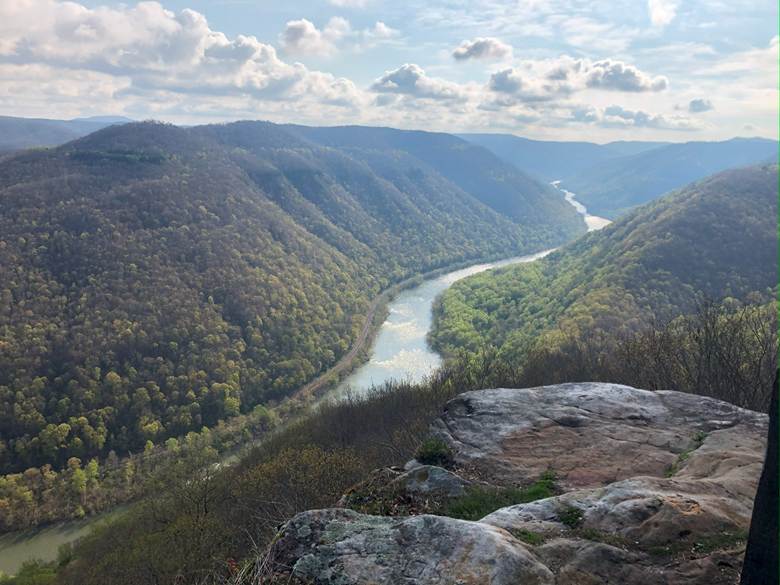
New River Gorge Overlook from Endless Wall Trail
Our son, Thomas, lives in Pittsburgh and when he suggested we check out the New River Gorge National Park, we were of course very interested. We had long known of the New River Gorge and bridge but it took on renewed interest upon gaining national park status just a few months before we visited. And in the midst of COVID, we were looking for things to do that didn’t require too much air travel. We decided to spend two days near the New River Gorge National Park and use Beckley, West Virginia as our base. We arrived at the Canyon Rim Visitor Center and walked to the Canyon Rim Lower Bridge Overlook and the Canyon Rim Boardwalk to examine the bridge up close. Of course, we crossed over it in our car but that was anti-climatic. We did forego the ability to be strapped to the bridge and explore the under part of the structure.
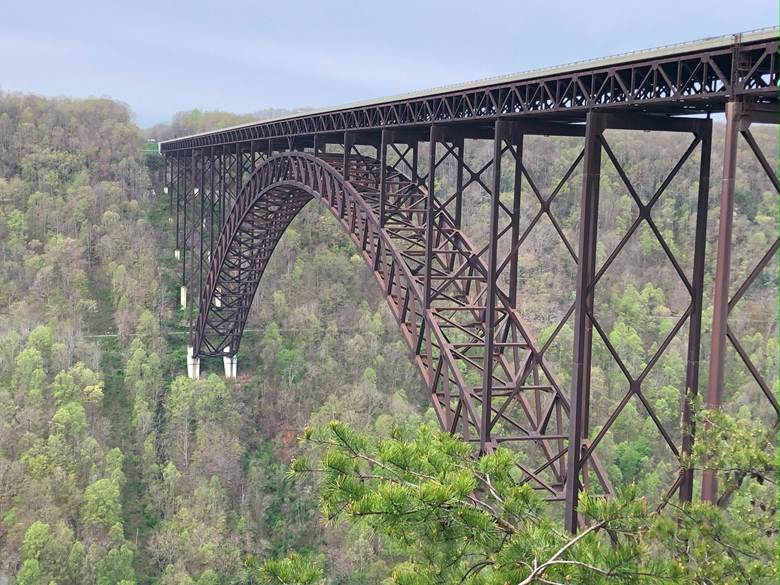
New River Gorge Bridge
There are over 100 miles of trails in the park across 5 different sections (Trails of Lansing and Fayetteville, Trails of Thurmond and Stone Cliff, Grandview, Glade Creek and Brooks and Sandstone – not including trails in the Gauley River National Recreation Area or Bluestone National Scenic River. We chose the 2+ mile Endless Wall to Emerald Point hike. There are much longer and more strenuous hikes, but this one provided the biggest bang (view) for the effort. I would strongly recommend getting the park publication on the trails in each of the sections and choosing a hike in each area to best experience the park. But this hike provides tremendous views of the gorge
The trailhead is about 1.5 miles from the Visitor Center and begins through a traditional mid-Atlantic states forest along Fern Creek. The forest contains hemlock, beech and black birch trees and rhododendron which were not yet in bloom when we were there. Note: the NPS is treating the hemlocks here for the devasting wooly adelgid disease which is destroying hemlock forests in the northeast. After a forest stroll, we reached the rim of the gorge at Diamond Point – we saw the beautiful river below and soaked in the beauty. We could see the whitewater rafters, rock climbers, the train tracks and the beauty of the gorge for miles.
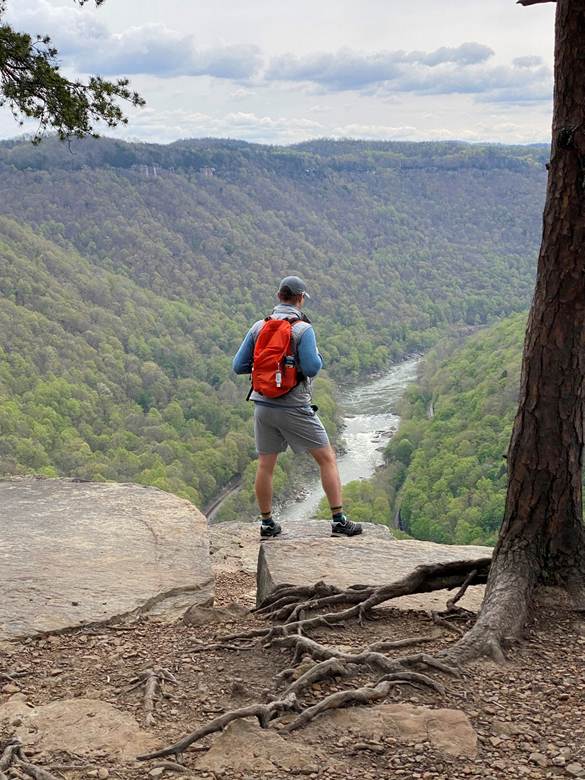
Thomas overlooking the New River Gorge
After our hike, we decided to drive down the narrow one-way Fayetteville Station Road to the floor of the gorge and touched the river and crossed the rural bridge in the valley – we walked to the base of the New River Gorge bridge and examined its base and wondered at the architecture. Prior to the New River Gorge being built in 1977 the Fayetteville Station Road was the only way through the gorge. The road is only about 8 miles in length but takes 30-40 minutes to travel due to its difficulty. It is not one you want to travel on a schedule as you will want to make stops to view the river, the bridge, the historic towns and the beautiful forest.
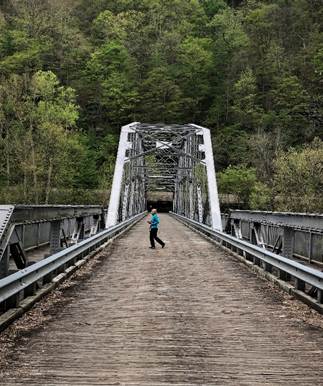
Missy on the old bridge on the gorge floor
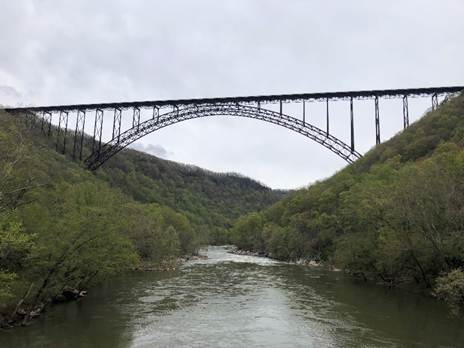
View of the New River Gorge Bridge from the old one
Lastly, we drove from Beckley down to the separate section of the park to observe Sandstone Falls on the river – it a wide falls with not much height – there is the ability to do some hiking in this area as well.
Our next day activity was to drive to the Thurmond Historic District. In the early 1900s, Thurmond was hopping! Coal was king and over 75,000 visitors arrived each year. Today it the town is abandoned but preserved by the National Park Service to remember its history. From the NPS site “Today, the town of Thurmond remains untouched by modern development. It is a link to our past, and a town with many stories to tell.”
The road to Thurmond is winding and narrow with a long one lane bridge to get to the main area. We exited the car and could feel the ghosts – the buildings are still intact with signs in the windows. We followed much of the Thurmond Walking Tour and tried to imagine the bustle of 100 years before. The town was impacted by three main events including two fires and the creation of the diesel locomotive which replaced the steam locomotive which relied on coal.
We explored the Thurmond train depot which still was a working Amtrak stop at the time we visited. The National Park is doing what they can to maintain the history and again they say it best on their site:
“Once the heart of the New River Gorge, Thurmond remains its soul. Although the businesses are gone, there are still memories made here in the 21st century.”
We were impressed with the variety of activity: hiking, the bridge, whitewater rafting, the mining history and the rock-climbing opportunities to name a few. We didn’t make all areas of the park and we really scratched the surface on hikes. There is so much to do at the New River Gorge park that we deemed it worthy to be a national park and a good representation of Mid-Atlantic forests.


 We Visited All 63 U.S. National Parks
Leave a comment