
When visited: July, 2020
Date Established: April 8, 1975
Park ranking: 55 out of 63
Why to go: Wilderness access, Water, canoeing, Being alone
Why not to go: Not a lot to do if you don’t want to/can’t get on the water
We visited Voyageurs National Park during July, 2020, in the heart of the COVID pandemic – we had planned to spend two weeks in Norway that summer – which unfortunately was cancelled due to the restrictions on international travel. Where could we go that would limit our interaction with people yet allow some amazing family time?
Missy and Matt had travelled to the Boundary Waters Canoe Wilderness Area near Ely, Minnesota on a canoe trip a few years earlier. After deliberation, we decided to look into whether we could go as a family. Missy contacted the outfitter and was able to get our family out in the Boundary Waters with a guide for a week. Due to COVID and our family getting full time jobs and significant others, this would be the last true family vacation we would do with the 5 of us. Of course, we didn’t know that then. So this post is mostly about our Boundary Waters experience.
The Boundary Waters is a Canoe Area Wilderness Area managed by the U.S. Forest Service as part of the Superior National Forest and it is not part of Voyageurs National Park. It is adjacent to the south-eastern corner of the national park. The area is over 1 Million acres! The USFS site describes it like this:
“The Boundary Waters Canoe Area Wilderness extends nearly 150 miles along the International Boundary, adjacent to Canada’s Quetico and La Verendrye Provincial Parks, is bordered on the west by Voyageurs National Park, and by Grand Portage National Monument to the east. It is composed of lakes, islands, rocky outcrops and forest.”
We wanted to make sure that we visited Voyageurs National Park on this visit so we planned a day trip with stops at the Ash River Visitor Center on Kabetogama Lake and the Echo Bay Hiking Trail.
From the NPS site: “Voyageurs National Park spans 218,000 acres of lakes, forests, and streams in northern Minnesota. Established in 1975, the park is named after the French-Canadian Voyageurs who once navigated these abundant waters. “
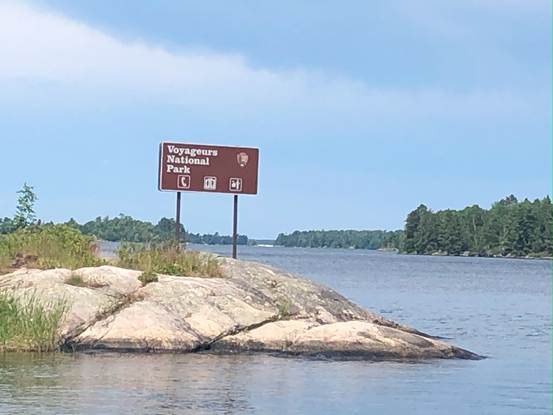
Voyageurs sign near the Ash River Visitor Center
We flew into Duluth, Minnesota and enjoyed our time there making sure to stop at the Portland Malt Shop for ice cream. We travelled north and saw the beautiful Split Rock Light House on Lake Superior. We stayed overnight in Grand Marias and enjoyed some beverages at the Voyageur Brewing Company.
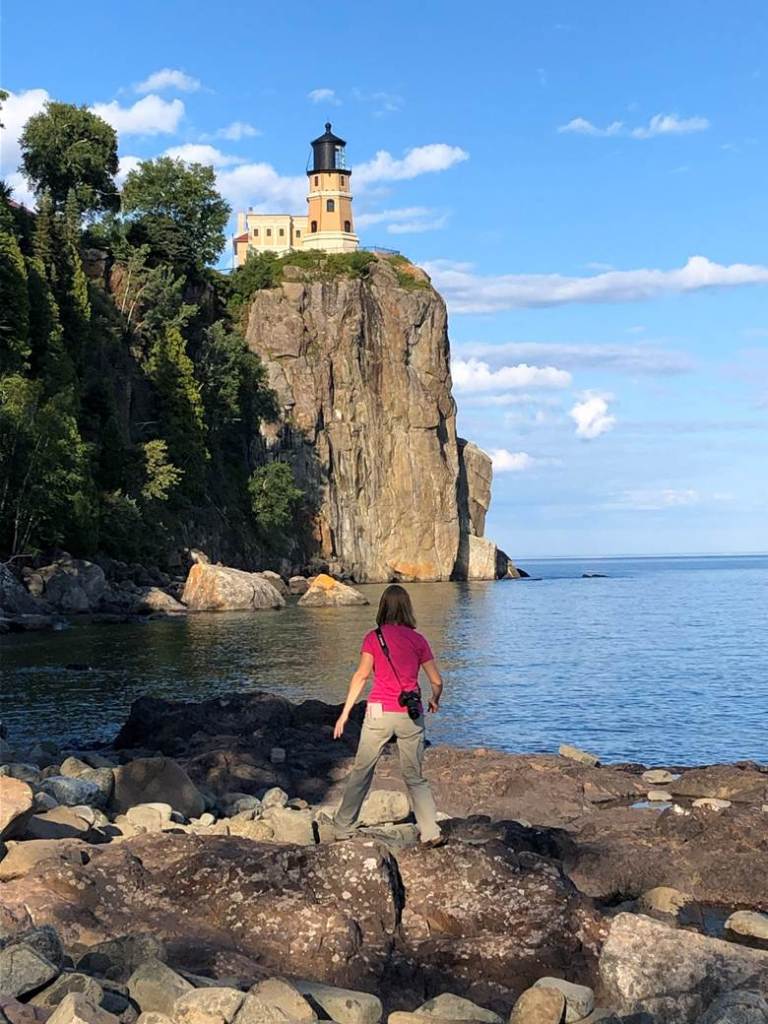
Rock Scrambling near the Split Rock Light House, Minnesota
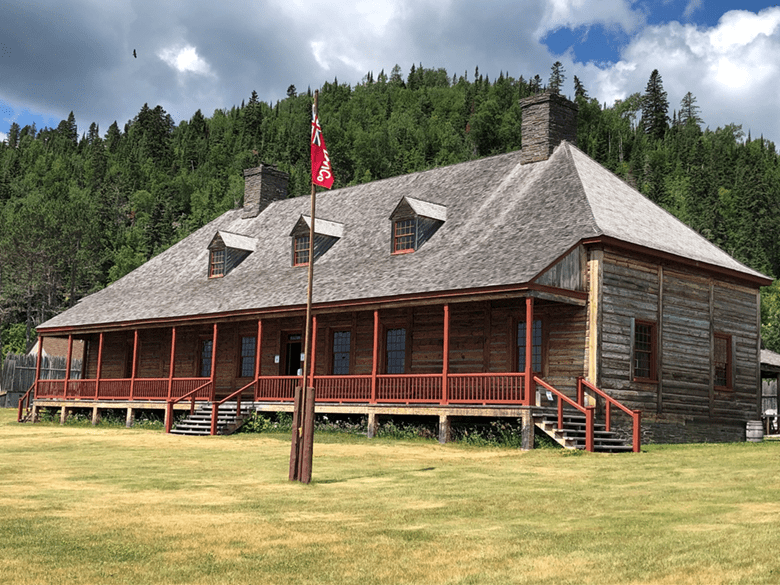
Great Lodge at Grand Portage National Monument
We also travelled to the Grand Portage National Monument. Grand Portage celebrates the history of the area and the importance of fur trade – it is fascinating to consider the distances these traders travelled by boat and foot in order to trade their goods. The area was one of the largest fur trading areas along with Fort Niagara, Fort Detroit and Michilimackinac. This site is definitely worth the visit.
We also visited High Falls, the tallest waterfall in Minnesota. It is accessible via a short walk and quite impressive.
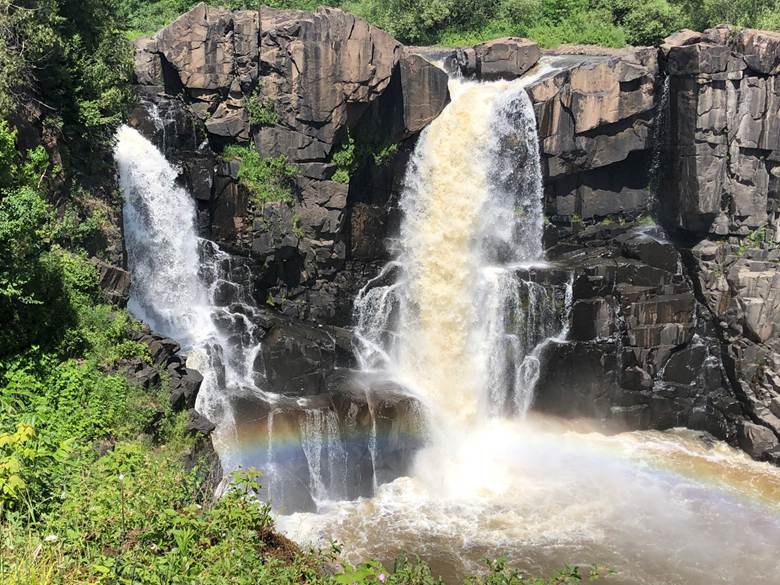
High Falls, Minnesota’s tallest
We arrived in Ely, Minnesota and planned for a day trip to Voyageurs from there – it is about a 2 hour drive. We bought a picnic lunch and headed toward the park.
Our visit to Voyageurs was significantly limited due to COVID and the lack of access to a boat for us. Boat trips to the historic Kettle Falls Hotel were not running nor were many other commercial tours or boat activities. We were mostly limited to hiking, which is not a highlight of Voyageurs. In fact, the Voyageurs hike we did was perhaps the worst national park hike we have ever done – it was the Echo Bay Hiking Trail – a 2.5 mile loop hike near the Kabetogama Lake Visitor Center that was through the woods – it had little access or viewing of the water – but it did have Tall Grass and Mosquitoes! The trail serves as a cross country ski trail in the winter and had seen little use that summer as there was waist high grass on the trail. Afraid of ticks, we made record time through the loop due to those considerations – I wish I could say there was a highlight – but I cannot. I was greatly chastised by my adult children for that one.
We did have a beautiful picnic lunch near the Ash River Visitor Center and enjoyed lake views and appreciated what wonderful experiences the park could bring if one could get on the water. We did not boat in park as the boating was shut down due to COVID and we couldn’t afford a private one. I hear the boat tours to the islands are a highlight of the park that should not be missed. Nor should Kettle Lake Lodge.
But this story will be about our Boundary Waters Wilderness experience. We had an amazing 5 days in the wilderness – fishing, swimming and some days not seeing another living human. I was very nervous – this trip would include a lot of paddling, camping and portaging our canoes – our first day required at least three portages – we had to exit the canoe and carry them and all of our gear from one lake to the next – this usually required many trips to get all of our gear portaged over. We navigated the portages well but our first day was shortened by a bad thunderstorm – we paddled as fast as we could to our campsite and attempted to set up our tents before the rain arrived – to no avail. We were poured on and the location we chose for our tent site had become a swimming pool. We were fortunate that happened, because we were able to choose a different spot for our tent after the storm. Our guide was careful to make sure we were not camping under a widow maker tree – the storms and winds get so strong that many trees come down and if it comes down on your tent – well you can imagine…
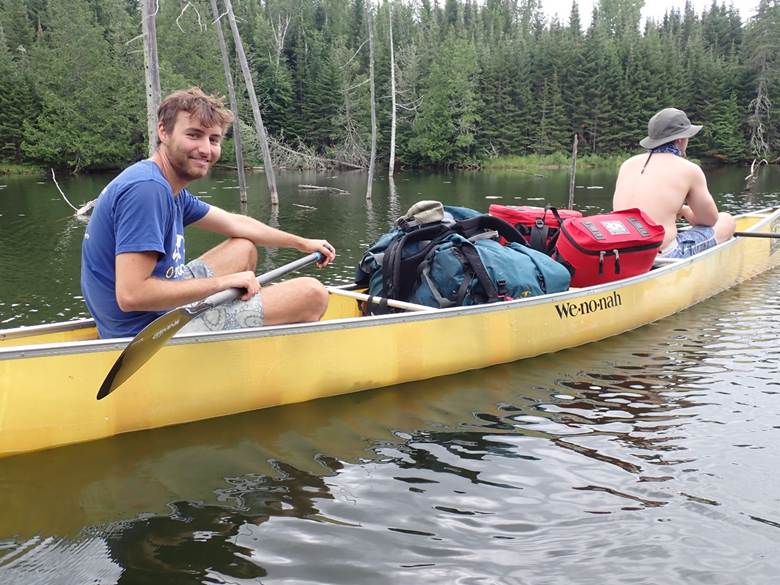
TJ and Matt in the wilderness
We had a nice dinner and were getting ready for bed when the next thunderstorm came through – we were in our tents and could hear the wind and rain coming – and of course thunder and lightning– when it reached us – it was raining sideways – our tent was at risk of becoming airborne – or at least that is what it felt like… Missy and I huddled together in the tent – holding on to each other fully expecting to be on a magic carpet ride – but after 10 minutes the storm left us some and were safe.. Our sons’ tents had taken on water and thus began the dry out process the next day..
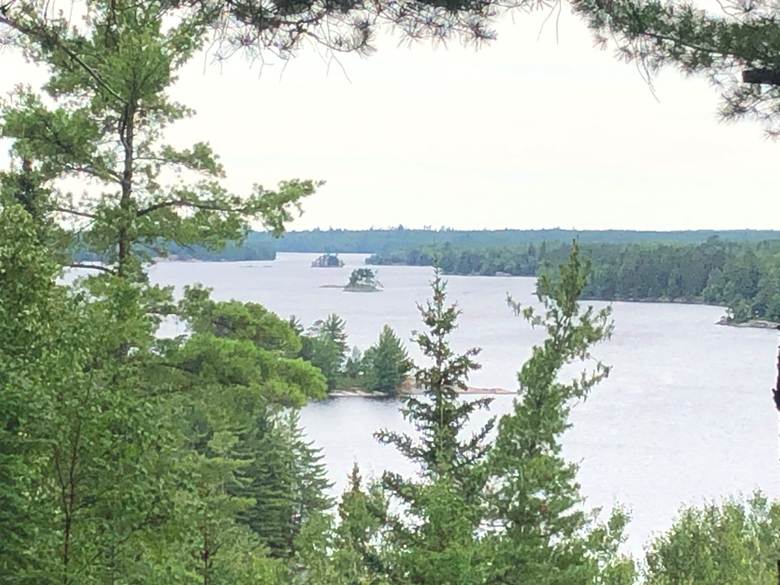
View from our Boundary Waters campground – Day 1
We enjoyed 2-3 amazing days of beautiful weather and almost no people – we were getting good at portaging our stuff (although I fell hard carrying two thirty pound packs on our longest portage of 1.5 miles – fortunately I landed on my butt and hurt nothing but my pride.) We had fresh fish one night for dinner and we left the remains on a rock face to watch the bald eagles swoop in and pick up their prize scraps. We saw dozens of eagles and loons on our trip. A loon call is a beautiful, soothing sound.
Our guide was amazing at maximizing our wilderness time and experience. We enjoyed swimming and wading in the lake and were able to experience a beautiful waterfall that was refreshing and a nice relief on a hot day.
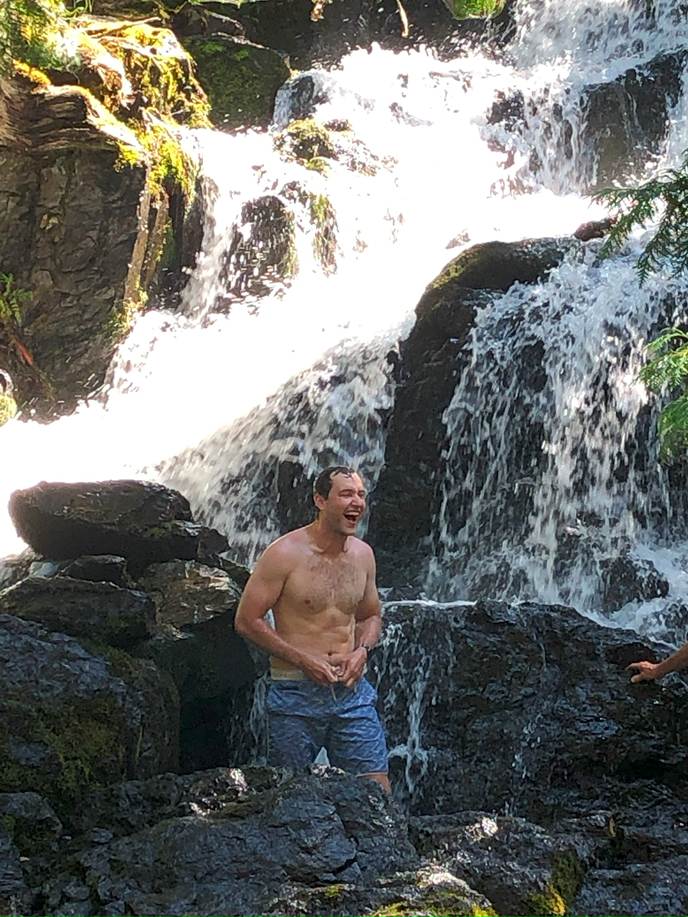
Boundary Waters waterfall fun
We also enjoyed the spectacle of the night sky including the comet, Neowise, which was visible to the naked eye. We had an amazingly clear night and the night sky was one I will never forget. Nor were the preparations! We made sure that we were covered from head to toe with clothing including bug nets and highly potent bug spray. It helped some, but eventually the mosquitos got through – you could hear them coming as soon as the sun went down – the buzz was so loud – they certainly limited the picture taking but it will be a sight I will never forget.
Our next to last day was one to never forget – how could you? Missy woke up with an inability to stand or control her movements very well. She also could not sit up without leaning over. We were all concerned she was having a stroke. Our guide didn’t have a satellite phone although we thought he did or we may have called for help via helicopter. Tension was high.
It was the windiest and coldest day of the week and quite probably not one that we should have been on the water. Before Missy’s illness our guide was planning to have us enjoy a non-paddle day. Winds were over 20 mph regularly and we would be paddling against the current – and believe me – there is a current. Had Missy been feeling well we would have probably stayed on land all day. But her health had all of us concerned (especially her and she is a doctor). Our guide helped us strap two canoes together to create a makeshift catamaran. In order to do so we needed to cut down two small pine trees to serve as connectors. TJ, Matt and the guide paddled the catamaran while Missy lay on the floor – she was unable to sit upright.
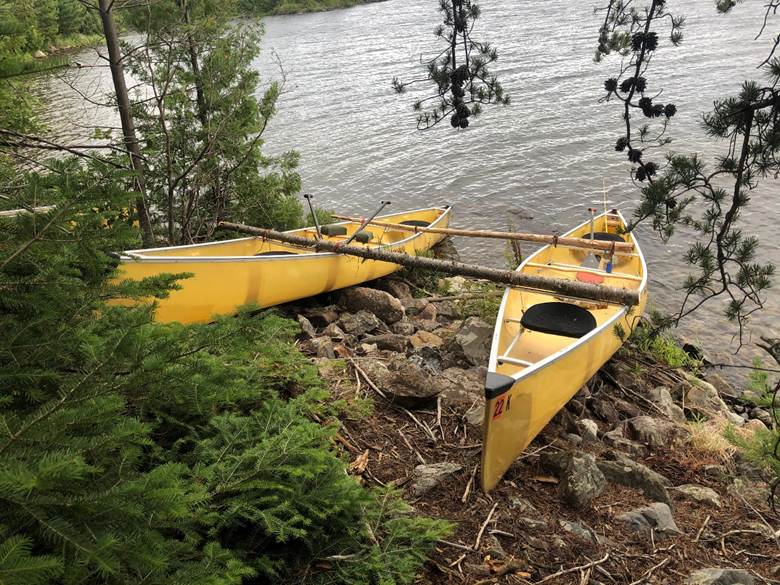
Makeshift catamaran used for transport
Scott and I drew the assignment of oaring the other canoe with the extra gear.. We did fine for the first mile or so – it was hard going against current – but then came the time that we had to cross the open water of a huge lake – I kid you not, the waves were crashing over the front of our boat – we tried to use the cat as a wind block but at one point the cat slowed and we could not – we went horizontal against the current and the waves that were going over the front of the boat were now over the side – we flooded and capsized – all of our stuff in the water and us and our boat upside down – and we were being moved by the current back from where we came. Scott and I worked hard to make sure we retrieved each item as best we could and hold onto it. Eventually the cat got us and were able to get to shore. Scott and I had been holding onto the boat and as much of our gear as we could and were in the water for at least 30 minutes – it was a cool day and the Minnesota lake water never really gets warm. We lost almost all of the distance we had paddled earlier by floating with the current in the opposite direction of where we wanted to go.
The cat was able to help us back to shore although shivering, Scott and I got the boat upright and drained and back on the water – our guide and we made a decision that we couldn’t go forward against the current – we needed to get a fire going so we made a makeshift campsite on the side of the hill and allowed Missy to sleep and Scott and I to find dry clothes and crawl up in a sleeping bag – I was freezing, Missy was a little better but still not able to be vertical much– and we were camping on a hill with a lot of pitch – fortunately we didn’t have any rain.
The next morning broke warm and calm – and I am not gonna lie – I was scared to death to get back in the canoe – every little bobble made me jumpy. But we paddled past yesterday’s tipping point with no issue (and no waves) and made it safely back to reach our arranged transportation. We made a short stop before we reached the transportation to do a little hike and look out over the Boundary Waters area — nothing for miles but water, trees and rocks.
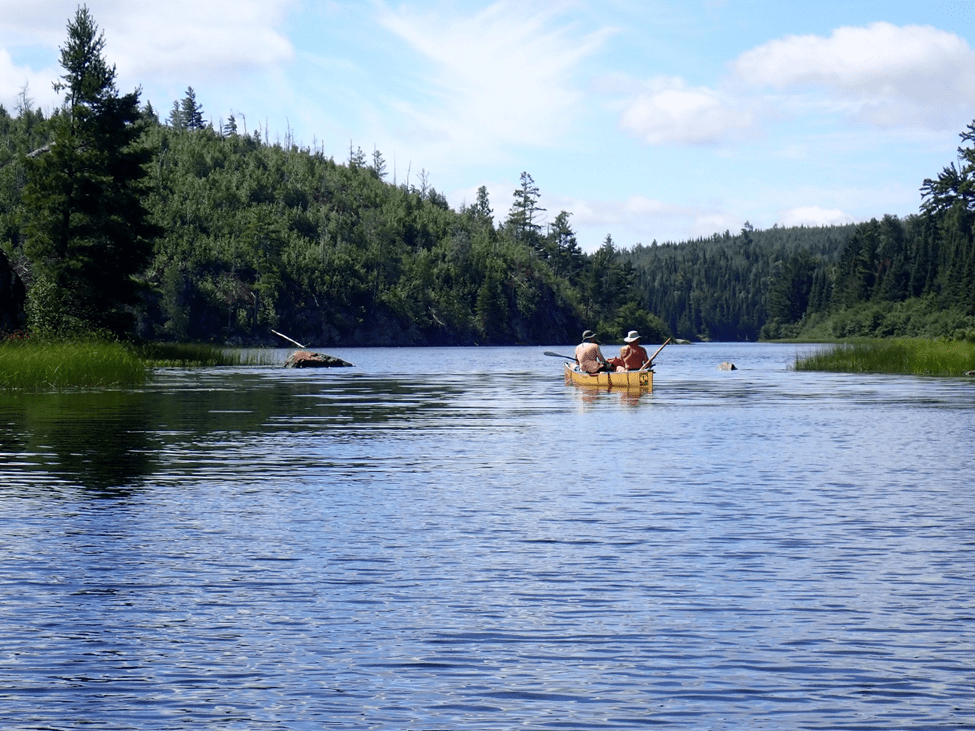
Canoeing in the Boundary Waters
That was probably the closest I came to dying in a national park – we never did diagnose what happened to Missy – our best guess is it was sone type of virus. Everything combined made it our scariest national park day – on the penultimate one with our family.
I imagine our time in the Boundary Waters was similar to paddling in Voyageurs. We left the area with an appreciation for the power and the spirit of nature. We survived violent thunderstorms, watched eagles fly with grace, were terrified of the power of the wind and the waves while helplessly floating quickly with the tide in the opposite direction than we wished to head. We also were astonished by the brightness of the night sky and the comet, appreciated the silence of the wilderness and realized there still are places in the world where we can be totally alone.
 We Visited All 63 U.S. National Parks
Leave a comment