
When visited: June, 1987 and October, 1989
When Established: October 14, 1994 as National Park and March 1 1933 as National Monument
Park ranking: 58 out of 63
Highlight: Cacti
Why not to go: Small park – desert, dangerous heat – rattlesnakes
Arizona is a beautiful state – being raised in the northeast it was completely mind blowing to me to be in the desert. I visited Sa – WAH – ro (Seguaro) when it was a National Monument in 1987 by myself and in 1989 with Missy as the last stop on our honeymoon.
When I graduated from college in 1987, I flew to Phoenix – my older brother was in training there for a few weeks and he encouraged me to visit – this was the first time I had travelled solo by flying and renting a car. The trip allowed me to explore many areas in Arizona including: Montezuma’s Castle National Monument, Sedona, Meteor Crater, Wupatki National Monument, Walnut Canyon National Monument, Canyon de Chelly National Monument, Grand Canyon National Park and Petrified Forest National Park. A trip to northern Arizona should include as many of these stops as possible!
During my trip I also travelled to Tucson to see the giant cacti and visited the historic town of Tombstone, Arizona. The history of the old west fascinated me and still does today. To see the giant cacti made it all seem so much more believable.
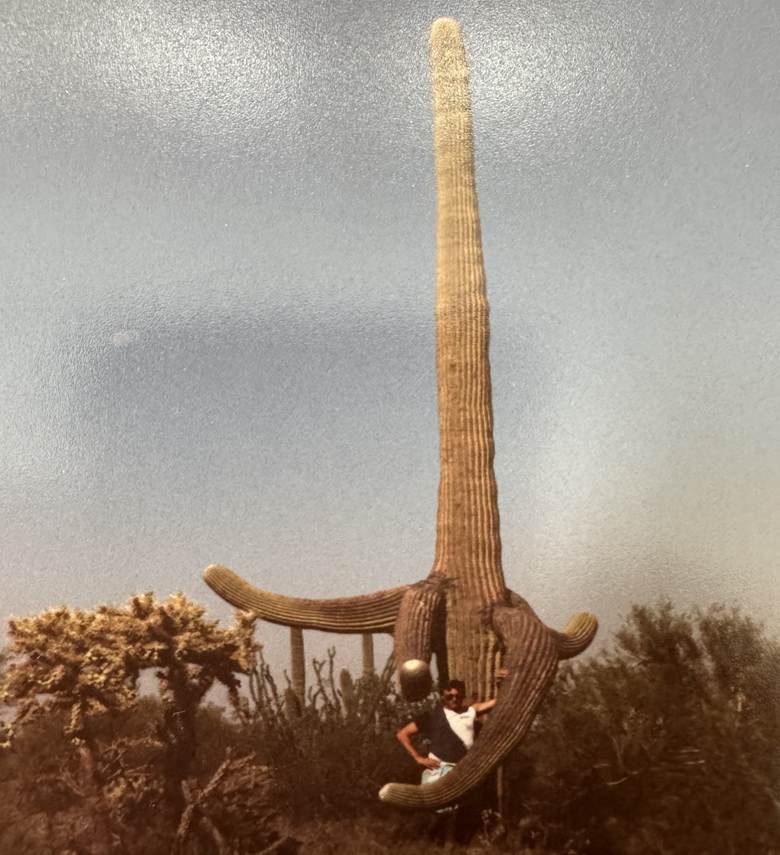
Giant cacti visit in 1987 — great quality photo and better shades
When Missy and I visited Arizona in October, 1989, Seguaro was the third park that we visited following a trip to the bottom of the Grand Canyon on mules and Petrified Forest National Park! We finished our honeymoon in 1989 with a resort in the Tucson area and ventured to see the giant cacti in Seguaro National Monument. We also visited most of the sites that I had previously visited in 1987 on our honeymoon and Monument Valley Tribal Park. I must admit that Monument Valley was more meaningful to me than either Petrified Forest or Seguaro and is a jewel that should not be missed by anyone visiting Arizona and Utah.
Seguaro National Park is about 10 miles from Tucson and consists of two sections both east and west of the city. The giant saguaro is the universal symbol of the American west. These majestic plants are protected by Saguaro National Park, to the east and west of the modern city of Tucson.
The National Park Service provides the following table to describe each section of the park:
| East of Tucson | West of Tucson |
| Acreage: 67,476 | Acreage: 25,391 |
| Picnic Areas: 2 | Picnic Areas: 5 |
| Loop Drive: 8 miles, paved | Loop Drive: 5 miles, gravel |
| Camping: 6 backcountry sites | Camping: None |
| 128 miles of hiking trails | 43 miles of hiking trails |
| Highest Point: Mica Mt 8,666 ft ^2 | Highest Point: Wasson Peak 4,687 ft ^2 |
| Opened: 1933 | Opened: 1961 |
| Older saguaro forest, higher elevations including scrub/desert grassland, oak/pine-oak woodland, pine/mixed conifer forest. | Higher saguaro density, younger saguaro forest, and lower elevation including scrub and desert grassland. |
In search of tall saguaros, we took the loop roads in both sections of the park including the Loma Verde loop in the eastern section. Again, we were young and inexperienced national park travelers and not yet in love with hiking, so we missed the opportunity to travel the 170 miles of hiking trails. Plus, we were quite sore from the mule rides 🙂
We enjoyed seeing the massive cacti trees and getting out of the car to pose in silly poses with the plants. We didn’t spend much time in the park but the images leave a lasting impression considering the cacti grow an inch or two each year. It is important to have these plants protected by our National Park Service. I wish I could share more on the hiking trails – perhaps we need to return to Arizona to spend more time in the desert wilderness hiking the trails. It’s been almost 40 years.
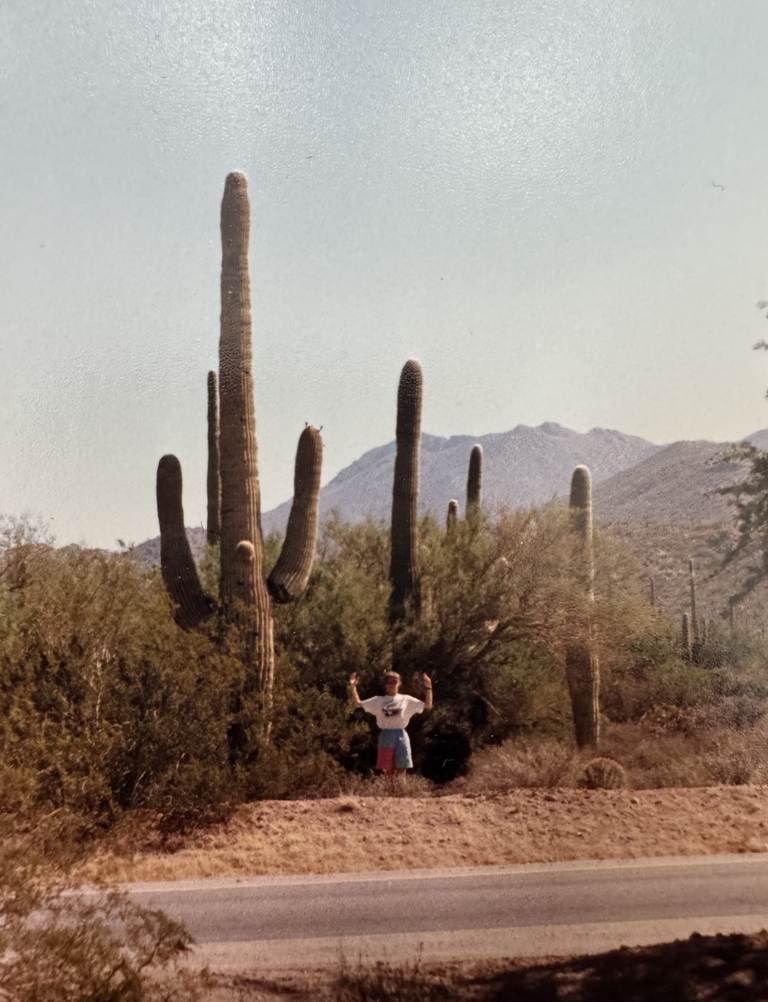
Missy being a cacti – 1989
 We Visited All 63 U.S. National Parks
Leave a comment