
When visited: February, 2020
Date Established: March 4, 1921
Park ranking: 61 out of 63
Why to go: Hot Springs have been protected since 1821 – go for the history and Bathhouse Row
Why not to go: This is not a typical national park like Big Bend or Great Basin – it is urban with hiking trails – it is the second smallest national park
We visited Hot Springs National Park in Arkansas in February 2020, three weeks before the world shut down because of COVID – the trip included Memphis, Little Rock and Hot Springs. Our plan was to also check out Shiloh National Military Park, the National Civil Rights Museum, and to eat barbeque and listen to blues on Beale Avenue in Memphis. Graceland wasn’t part of the plan, but we succumbed to the pressure and took a visit. We started in Memphis and stayed at the Peabody Hotel, home of the famous Peabody Ducks, who parade out of the elevator every day to their spot in the lobby and return later in the day up the elevator.
Our first stop was the National Civil Rights Museum, which includes the historic Lorraine Motel in Memphis. This was one of the most moving visits we ever completed and one that I will not soon forget.
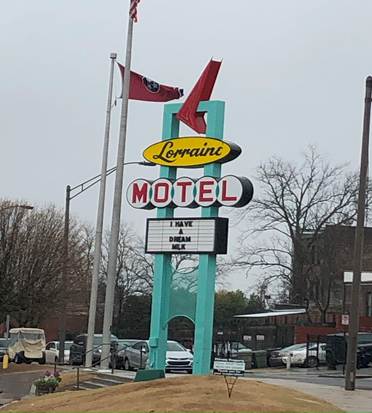
Lorraine Motel – National Civil Rights Museum in Memphis
“Early evening, April 4
A shot rings out in the Memphis sky
Free at last, they took your life
They could not take your pride”
Pride (In the Name of Love) – U2
To see the balcony where Martin Luther King, Jr was shot, to stand where the shooter fired the shot, to read about the thousands of struggles for freedom, was truly unforgettable. It is a worth a trip to Memphis simply for that – forget Graceland.
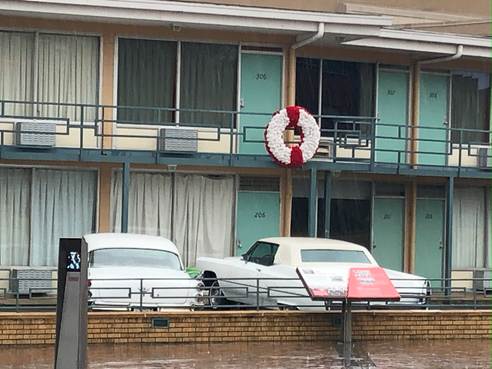
Hotel balcony when Kartin Luther King, Jr. was murdered seen from where the shot occurred
We enjoyed other parts of Memphis, Sun Records, Gus’s Fried Chicken, Beale Street and BB King’s Blues Club and we saw the Jungle Room in Graceland but the Civil Rights Museum was the highlight.
On this trip we also toured Shiloh National Military Park – one of the least appreciated battles of the Civil War (at least for a Pennsylvanian who was married near Gettysburg). The South had almost captured Grant and his army on the first day of the battle. Had not General Albert Sidney Johnson been killed in battle, they may have defeated Grant in 1862. But US army troops arrived overnight and launched a massive counter attack which the Confederates could not withstand – Over 23,700 casualties occurred in 2 days in some of the fiercest fighting in the war. It was one of the most important battles in the western theatre.
But alas, this is about Hot Springs National Park. The hot springs have been protected since 1821 and established as a national park in 1921. The hot springs flow from the western slope of Hot Springs Mountain. The hot springs are not preserved in their natural state – instead they are preserved for public consumption for use in bathing.
The national park is in downtown Hot Springs, Arkansas, making it fairly unique for a national park (except for Gateway Arch). In the park there are many historic bathhouses, walking or hiking trails and several restaurants (and a brewery!). You can arrange to bathe in the hot spring water for a fee. The Bathhouse Row area is a national historic landmark and contains the grandest collection of bathhouses of its kind in North America, including many outstanding examples of architecture of the time. The Fordyce Bathhouse serves as the park’s visitor center.
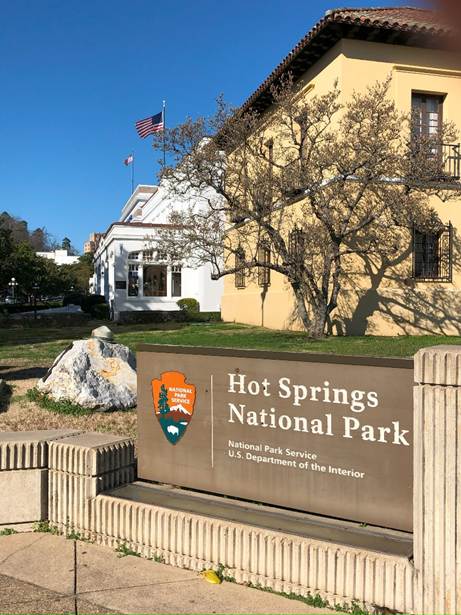
Hot Springs National Park
We enjoyed walking through the town and seeing the hot springs along the path and those encased in cement to feed the bathhouses
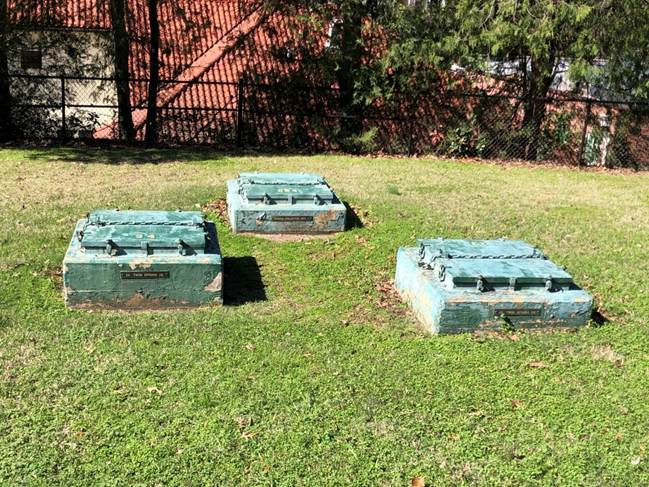
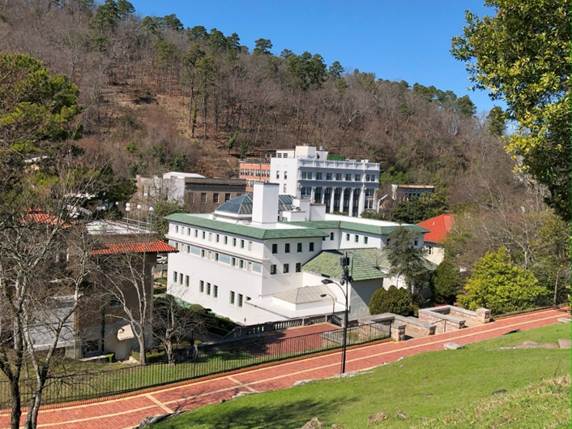
Views from above the hotels and pictures of the hot spring encasements
We toured the visitor center and learned much about the history of the park and the history of health. In the late 1800’s not as much was known about health and hygiene. Bathhouse Row was set aside to allow people from all over the country to benefit from the “healing” waters. The water was believed to assist with skin and blood conditions, nervous affections and rheumatism.
In the early 1820s and 30s, the hot spring infrastructure was rustic (nonexistant?). Crude vapor baths and wood tubs were used early on. Eventually physicians arrived as patients remained for one week to two months for treatment. Hot baths were often taken daily for two to three weeks to assist with the healing. Today the bathing is used for more modern reasons such as relaxation.
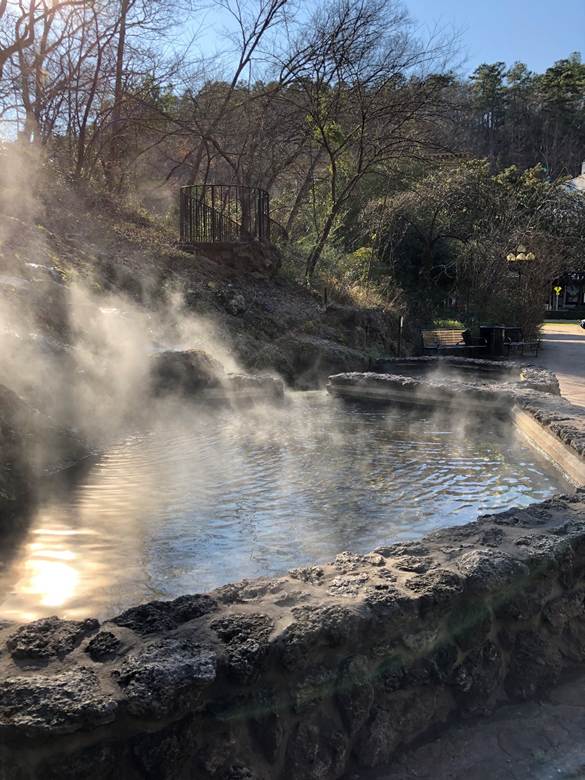
Hot Spring in town
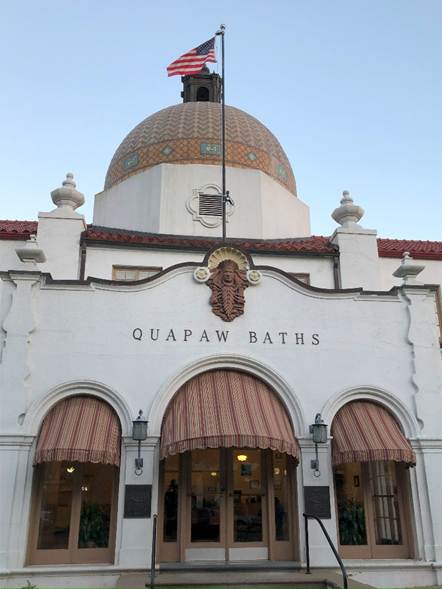
We arranged for private baths in the Quapaw Bathhouse. We each had our own room and ability to soak for up to an hour – the water temperature was hot but it was controllable. It was interesting to think about soaking in natural hot springs water and the history of the place.
On leaving Hot Springs en route back to Memphis, we stopped in Little Rock at the Clinton Library and the Little Rock Central High School National Historical Site and learned about the Little Rock Nine. Nine brave students that began the desegregation of schools in Little Rock. The site is worth visiting to hear their stories, view the high school and imagine the violence and tension that existed 70 years ago.
Hot Springs is a unique park – again it doesn’t meet my definition of national park – but more of an historical park. The fact that the hot springs have been preserved for over 200 years – well before the establishment of the Park Service shows as a testament to the draw of the location. For that reason, I have it ranked 61st out of 63 parks – but the beautiful weather, unique architecture, the historic bathhouses and the relaxing baths make it worth the visit – especially as part of a Tennessee – Arkansas swing. The sites that we saw in a brief amount of time made this trip unforgettable and easily achievable over a week’s vacation.
 We Visited All 63 U.S. National Parks
Leave a comment